
Why Older Millennials Are Grieving Right Now
It is not nostalgia. It is the loss of the path: broken social contracts, an AI transition that is hollowing out work, and a future our generation was not promised.

This is Empathy Elevated - your weekly guide and shortcut to mastering emotional intelligence through the power of empathy. Last week I had a guest post by Mike Watson on why The most employable technical people aren’t the best builders
This week I am writing a post a little bit outside my usual lane: less framework, more reflection. Not the tactical workplace breakdown you've come to expect, but something quieter. It felt fitting for the moment.
Emotional Intelligence • Stoicism • Human–AI Partnership
Practical frameworks for clearer communication, better judgment, and less friction in modern work.
I don’t think it’s grief for a more simple time where I walked with my Discman and blocked calls on my family’s land line by being on our dial-up internet.
No, it’s not the things.
It’s the feeling.
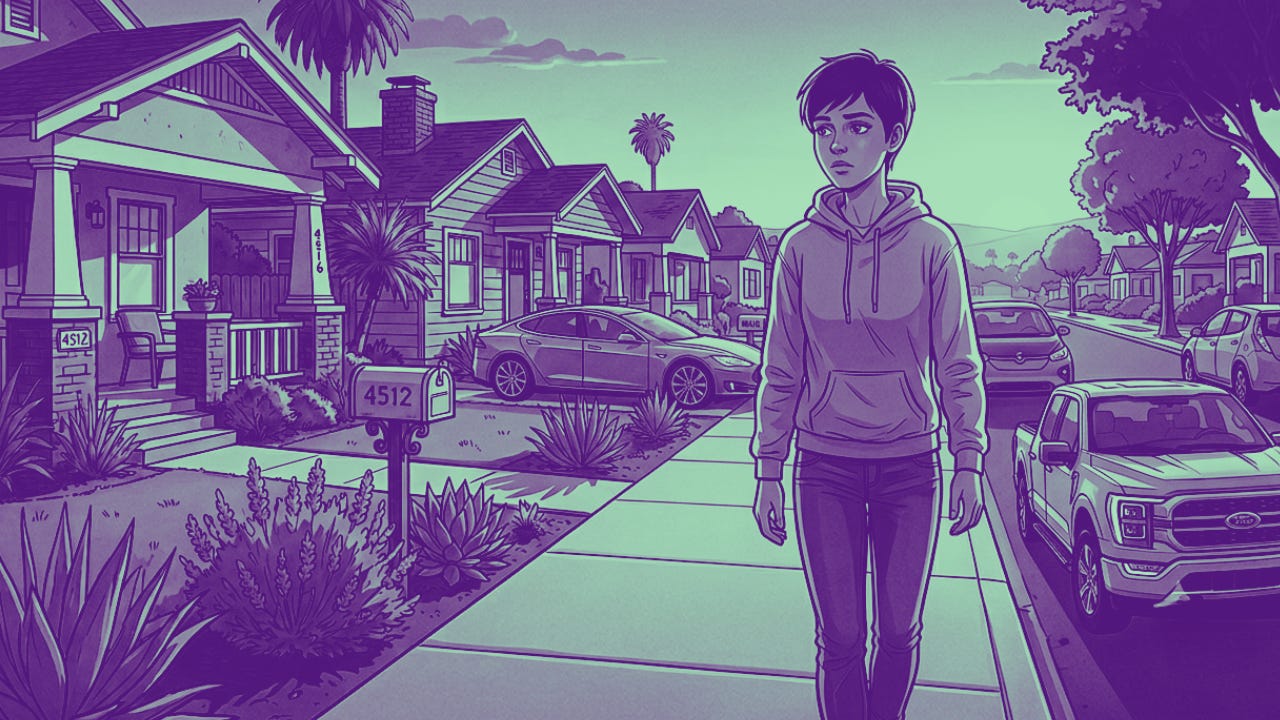
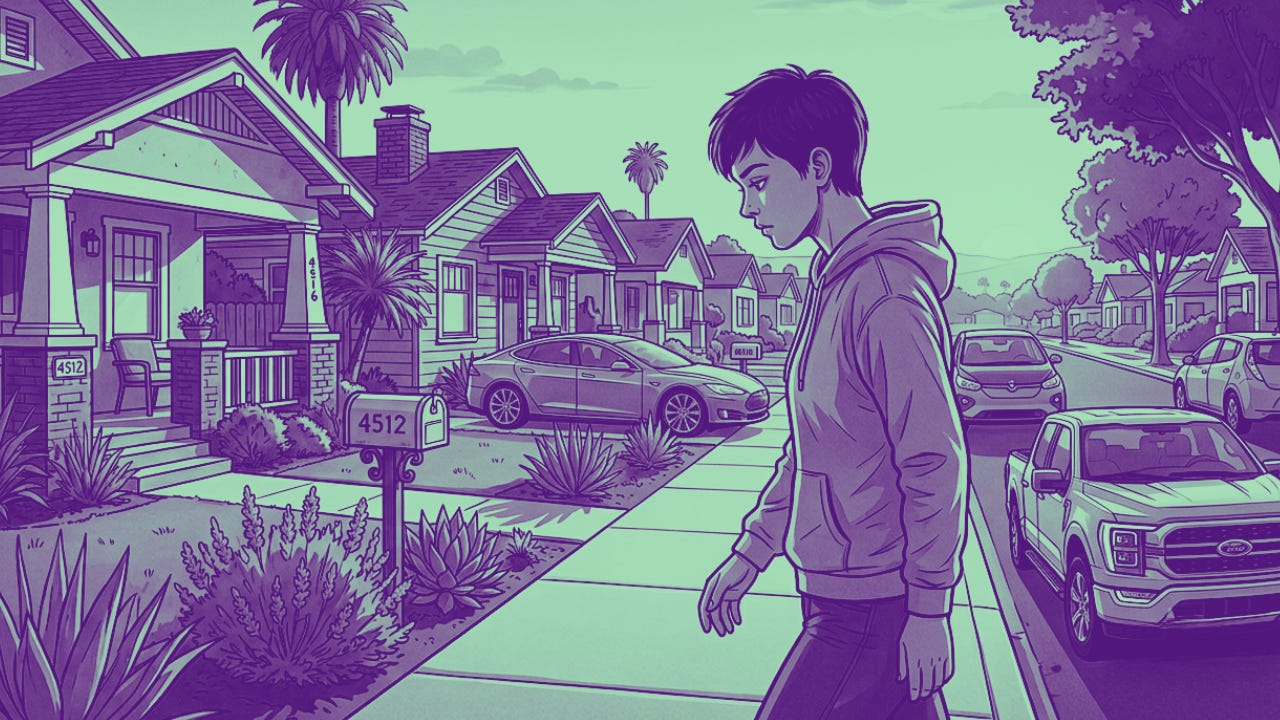
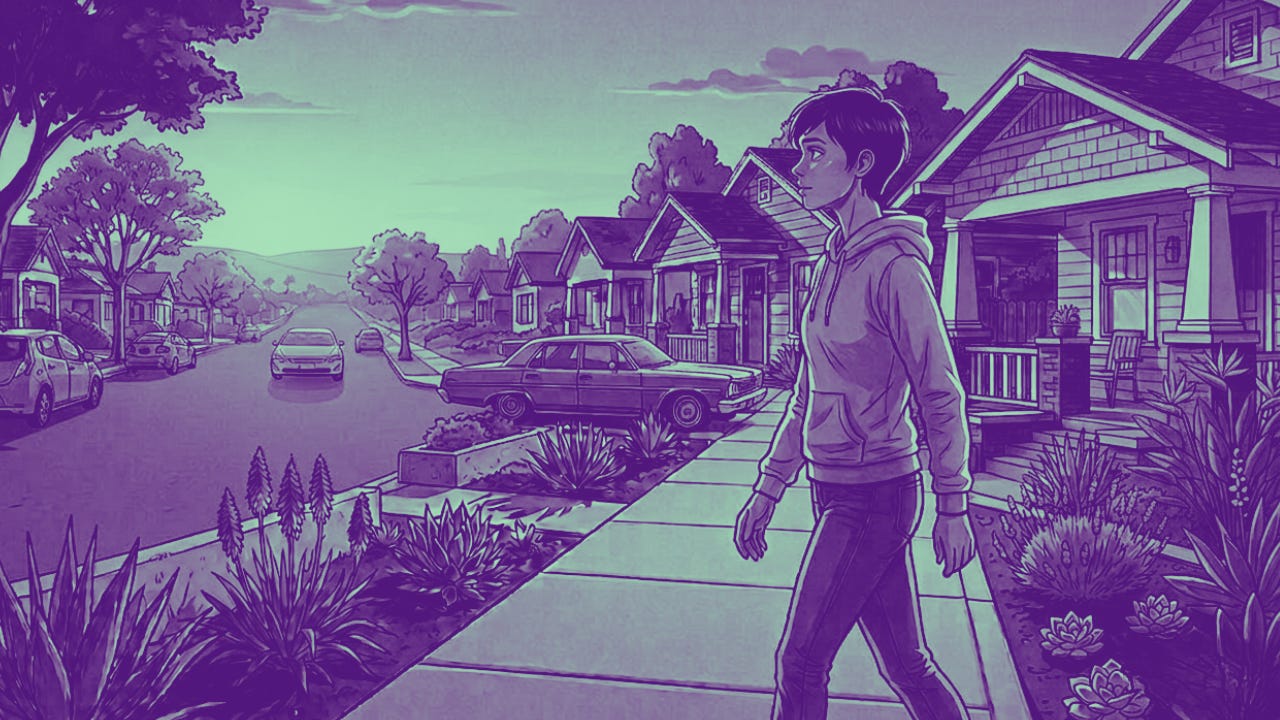
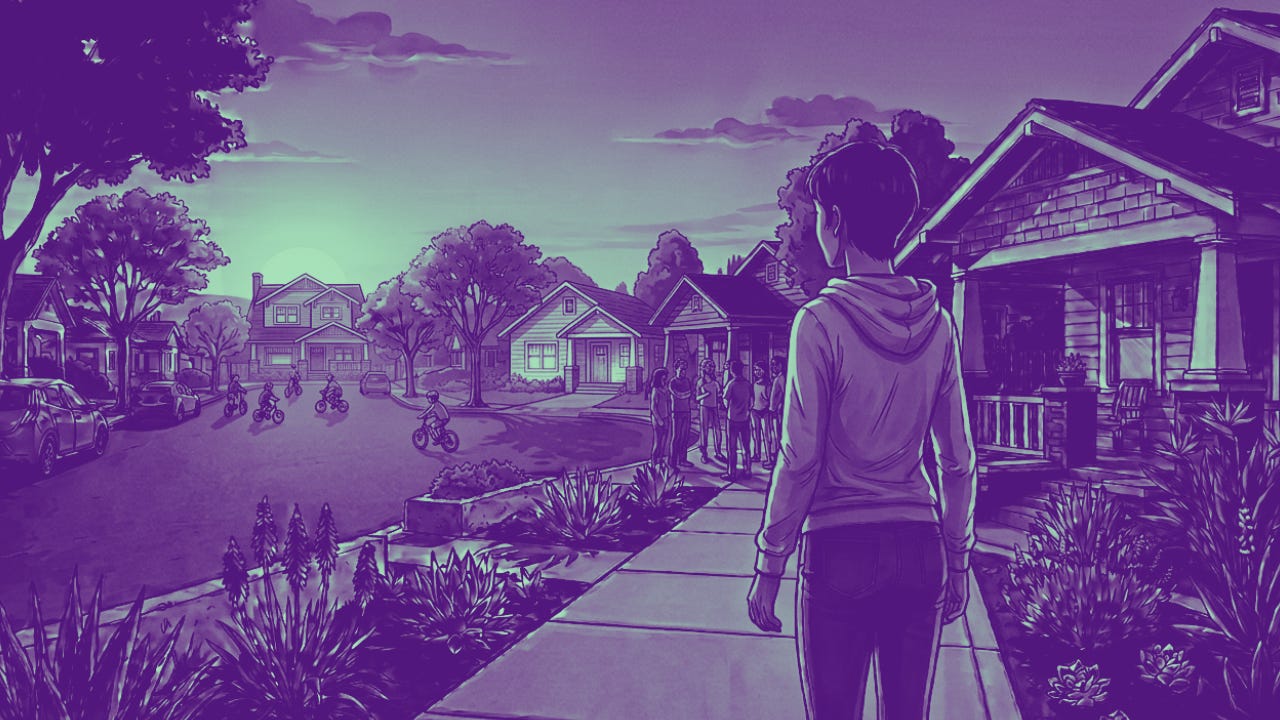
Just a little bit over a week ago, I took an evening walk as the sun was gently setting over the hill. The shadows were changing, and the light dimming.
It was something I had no control over of. I could only observe it and be in the scene.
The social contracts that once stood have shattered in one “once in a lifetime” event after another.
The old world is changing, one shaving at a time, bringing in a new one. The process is not complete, and I find myself at times missing the old while feeling optimistic about the new.
Do you feel it?
On a holiday weekend built around remembrance, it seems fitting to sit with what we are losing alongside what we have.
From a Discman to Coding AI Agents in One Lifetime
I work in an area of tech I had never heard of until my junior year of college, and even then only grasped the surface. Working with mass amounts of data and mapping processes with my black belt (not Karate) would have brought a confused face from my high school guidance counselor.
I might have laughed had I been told I was in an Analytical field, having been told most of my life, “I’m bad at math, and so are you.”
Now in 2026, I code and build the logic of Agents, to perform menial tasks for me and the team I support. I rarely labor over the minutiae of drag-and-drop as I did early in my career.
Asking a person is not necessarily needed.
When I was 5, I remember telling my dad I wanted to start a business where people could stop by and get directions from his computer.
He laughed, telling me it was a word processor and computers could not do that.
I stomped off, “Well…they should!”
Decades later forget asking a human for a computer to give directions, the computer now gives you the direction through a dime a dozen, even with a basic question on how long to bake salmon.
My, has my life has evolved, and that of so many in my generation who were not born into a world of all the tech we have.
But what feels like it is missing, if we have so much knowledge and convenience, innovation and opportunity?
Certainty.
This is not nostalgia for a simpler time. It is grief for a time of knowing the path, and of having known social contracts. That is mostly gone now.
Where the Certainty Went: 9/11, the Great Recession, and the End of the Path
I was in high school when 9/11 happened. My clock radio went off, and the first thing I heard was, “This is so unreal.”
That was the beginning of the end of certainty. The exceptionalism and privilege to believe that I lived on American soil was protection from attack was gone.
I went to college, as many in my generation did, and earned a good, practical degree in business. I was told to focus on my grades and school, but even then I saw the social contract gone. Getting a degree was not enough. I needed to prove my worth above and beyond with involvement in the community, internships, and other accolades.
I managed to get a job at a Fortune 500 company after six months of intensive networking and applying to dozens of roles in my last six months of college, during the latter years of the Great Recession.
What College No Longer Promises
College used to mean a better life.
Now I look at the generation graduating, and I deeply empathize. Their job prospects are looking even more intimidating than mine.
The unemployment gap between young high school graduates and young college graduates has narrowed to its lowest level since the late 1970s, according to recent Cleveland Fed research. College graduates aged 22 to 27 now find jobs more slowly than their high school peers.
Layoffs abound. We were growing up alongside layoffs as well, but now they see people out there well beyond qualified remaining unemployed for years at a time.
Just last week, Meta (parent company of Facebook), let go of 8,000 people in a sweeping layoff.
I see professionals on LinkedIn writing publicly about facing homelessness after months and years of unemployment. People who did everything right.
The old world is chipping away.
Raising a Pandemic Baby in the AI Era
I thought on my walk about how I walked that route often during COVID, just before my daughter was born.
My daughter was born into the world during a once-in-a-century pandemic.
Will she be of a generation that automatically goes to college for a better life, or pursues some other route into adulthood?
She still reads people’s emotions in their eyes with incredible accuracy, as she spent her first year of life often looking at faces obscured by masks.
The skills that emerge can be a product of our environment, in ways we do not plan for.
The talents that emerge take us places we do not expect, and lead us down the paths we once imagined.
Leading Workshops Inside the AI Transition
At the end of this week, I venture across the Pacific to be at the front of a room, no longer as the pupil, but as an instructor and workshop leader in my capacity as a Lean Six Sigma Black Belt. Lean was in part founded at the Toyota factory, just a 20-minute drive from where I was born.
I envisioned myself over a decade ago, standing up and running a workshop. That vision comes to pass now.
But why do I still feel this low-grade grief?
As I talk to Claude about the city and country I will soon be in, places I have never set foot in, that tinge of adventure I once had navigating with just a compass in a strange city is gone. My iPhone will take care of it.
The last workshop I ran in Atlanta is part of what opened this opportunity. But I know all is passing.
I have seen exceptional people lose their jobs at companies that lay off 50% of their staff in the name of AI. Not that there is any talk of that where I work now, but I also know not to rely on the social contracts of the old world as we transition to the new.
I see so much potential in AI to lift humanity from the mundane and open our capacity to be more heart-centered, lead generously, and be in community with one another.
But we are in the transition phase, and often we are not seeing it. It feels like humanity is splitting in two.
AI is being used to justify surveillance reminiscent of the regimes my ancestors escaped. It is being used to displace professionals who did everything right. It is being used to outsource creative thought.
Will it go on forever? No. The math will not allow it. If the population is deeply unemployed, who will buy the products and services that AI produces?
I advocate for AI-human partnership in the service of humans flourishing. I write about it here on Substack. I build for it in my corporate work.
My workshops on finding inefficiencies in process are meant to alleviate the boredom of the clicks and the time-suck of reformatting at 11pm.
I was walking down the street, now on the flat part of my trek, and grabbed my phone in my back pocket.
I pulled up Claude and asked when sunrise would be in Southern California tomorrow.
What Still Holds at Sunset
As I neared my 10,000 steps, my grief was still there, but the ability to be mindful and examine my thoughts as if I were almost an outside observer brought calm.
The birds were not chirping anymore. My mind was not in a pit.
I knew why I had a low-grade malaise.
It was not nostalgia, but the acceptance of a world around me changing, beyond my control, and of me as an observer and actor within it, depending on the moment.
Some things don’t change. At the tail end of my walk I went to reconvene with my family and neighbors in the cul-de-sac around the corner.
I would chat with Sarah. Not my friend Sarah, I grew up with in the cul-de-sac around the corner, but now Sarah, the mother of my daughter’s friend. Sarah, even if a different Sarah, still lives in the cul-de-sac around the corner, and the laughter of kids still echoes as the sun sets.
The light dims. The shadows change. Some things, you only get to observe.
EMPATHY ELEVATED IN ACTION
Emotional Intelligence → Don't ignore the malaise — name it. When something feels off, sit with it long enough to identify what it actually is. You cannot respond well to a thing you have not named.
Stoicism → Sort what you can act on from what you can only observe. Some of it is yours to influence; much of it is not. Becoming the observer of your own thoughts is what turns a pit into perspective.
Human–AI Thought → Use the tools without surrendering your agency. Let AI handle the sunrise times and the routes — but notice what that convenience quietly replaces, and keep the human work human.
✅ What I’ve been analyzing this week (reading, watching, listening, etc.)
📖 I’m reading The Guide to Going Viral: The Art and Science of Succeeding on Social Media by Brendan Kane. The book is focused mostly on video, but certain aspects are still applicaple to writing.
👀I read this post by Quy Ma on how platforms, states, and empires learned to make you pay the same toll
Thank you for writing this Collette. I am a “younger millennial” and I, too, am grieving the social contract. I always write about my grandfather who worked for one company for 35 years and retired with a gold watch and a pension. It turns out his lessons were the exception, not the rule.
Let’s bring the Discman back! I still have all these CDs ready to go.