
You Were Never Just the Task
What AI can automate, and what it can't touch

This is Empathy Elevated - your weekly guide and shortcut to mastering emotional intelligence through the power of empathy. Last week, I had a guest post by taylor desseyn, the human layer of a technical interview
Emotional Intelligence • Stoicism • Human–AI Partnership
Practical frameworks for clearer communication, better judgment, and less friction in modern work.

We strolled behind the group of our other colleagues after an evening of team building at a local burger and brew spot on the outskirts of Atlanta.
My shoes, still on from the workday and not my usual ones, clacked on the sidewalk as we kept pace with the group. The echo may have been stronger with the brick walls surrounding the quaint shops of the small town’s downtown strip.
To our left, people were practicing behind the glass with their large wooden swords and behind a face of armor. I told my colleague they were practicing Kendo, a sport from Japan.
It wasn’t just the fight we were watching.
He asked me, point blank, after a day of talking about all things automation in the office, “Hey, you think our jobs are even going to be around in a few years?”
A stab of empathy caught inside my chest. His role was built on repetitive tasks; I knew that wouldn’t hold. I wouldn’t lie to him. But I wasn’t going to hand him a grim future either.
Watching my step on the uneven sidewalk, I only glanced up briefly to make eye contact and told him, “No, not exactly as they are now, but the nature of work will transform entirely, and we will have work to do. The way we work is completely changing, and we are in the middle of it.”
He responded, with some trepidation but signaling relief, “huh…I think you are right, you know…”
The railroad train blared, and just like that, we all came to an abrupt stop. The train whooshed past us, and we stood still in silence, part of the scene with the accelerating train, much as we are in this age of AI.
Marcus Aurelius wrote that we suffer more in imagination than in reality.
Standing near the platform, none of us could slow the train down. We could only decide how we met it, braced or steady.

You Were Never Just the Person Who Did the Task
Professionals in tech, like my colleague I was talking with on that evening in Georgia, and I included, have historically measured their worth through deliverables, but that measure is no longer enough.
We work with the velocity of technical outputs. We drive ourselves to reach our sprint goals and move on to the next item in JIRA. Even if we do not work against a strict Agile or ticketing system, great pride can be found in reaching the end of a milestone.
But AI disrupts that proxy to value, at least on the surface, and exposes how incomplete it has always been.
When a task that would have previously taken 12 hours now takes 12 minutes, it’s a relief on our psychological load, but the thought is normal: now what? Can the next item on the list be automated? Then what? Am I just pressing a few buttons or configuring the automations to run freely?
It’s not a fear of free time. It’s an emotional disorientation from losing a legible performance metric. What is your value if you sit there and perhaps over half of your prior work can be done in mere seconds?
Your value as a tech worker was never in completing tasks alone.
It’s been in your ability to apply judgment, ask those questions with context, read the room for consequences, and build hard-earned trust.
That does not change; it only amplifies as the age of AI rushes upon us, like the train that made us stop just to be present.

Your Value Lives in the Decisions No One Else Can Make for You
An AI can create content. It can also suggest how to approach a task or a due date that is looming on Tuesday morning.
But you hold the keys of discernment. You choose what to do.
A task that was once exclusively human but is now done in a human-AI partnership often requires your context. The generated list of to-do items might look neat from AI, but you apply your judgment on when and how to approach them. If you are a morning person, why do you do the most challenging task late in the day, just because AI told you so?
Even before the inception of the age of AI, your value was always in what you chose, not just in what you produced.
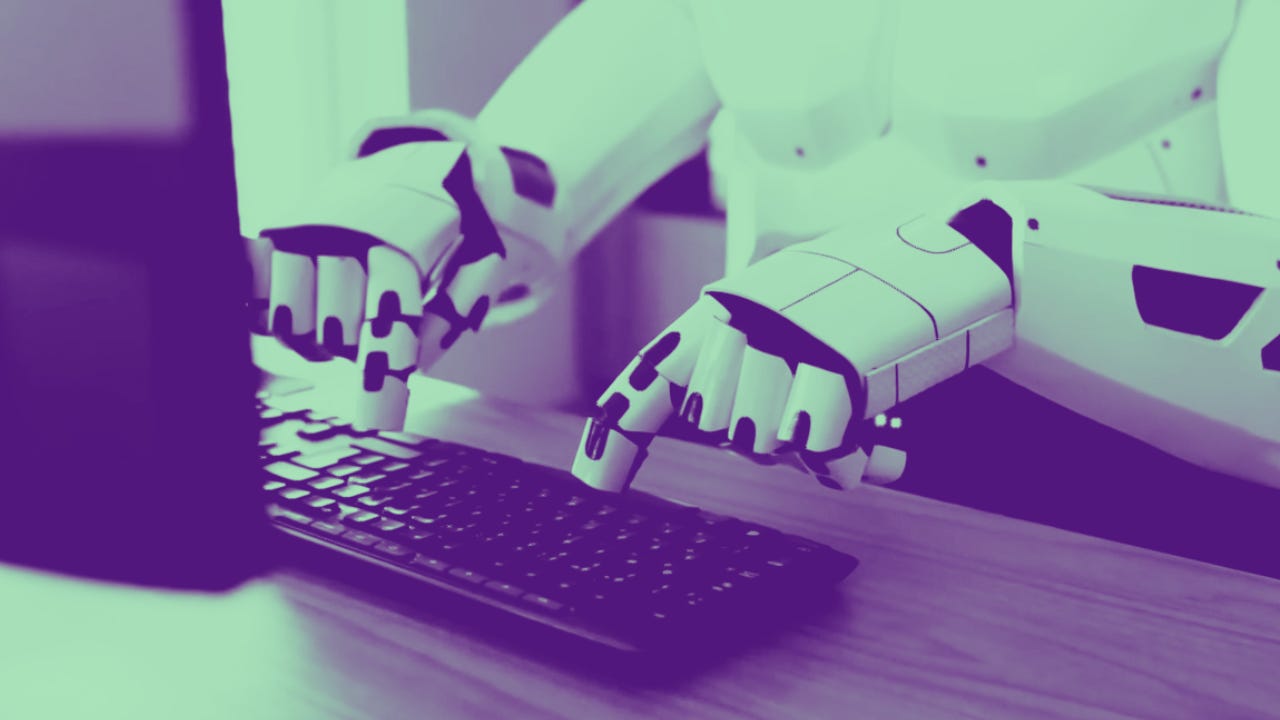
Like my colleague in Georgia, one of our mutual coworkers was heartbroken to hear that he was now focusing his time on another department. It wasn’t just because of the work they did jointly for years, but because of the fellowship and human sounding board, versus the clanks of a keyboard and text on a screen.
AI can hand him a faster version of his old role. It can’t tell him which parts of it were ever the point. As a professional in one of these roles, remember this: the skill is not just doing the work, but knowing whether it’s being done right.
As a professional in one of these roles, remember this: the skill is not just doing the work, but knowing whether it is being done right.

What You Bring That Can’t Be Prompted
You can prompt an AI for a summary. You can prompt it for a plan, a first draft, a list of risks. What you can’t prompt is the judgment call about which risk actually matters to the people in the room.
That’s taste. That’s context. That’s the thing that comes from having sat through enough failed launches, enough tense retrospectives, enough evening conversations on a sidewalk in Georgia, to know what the data doesn’t necessarily say.
Empathy becomes a performance skill, not a personality trait. You read the exhaustion behind a Slack message that says “sure, no problem.” You know when a deadline is real and when it’s someone else’s anxiety wearing a due date. No model gets trained on that. You already are.
Not because the technology isn’t capable, but because capability was never the same thing as understanding.
The Platform Was Never the Point
The train didn’t ask permission to arrive, and it won’t slow down because we’d like more notice. Neither will this.
My coworker did not need me to stop the train. He needed someone to stand next to him while it passed. I told him what was coming, without softening it.
That’s the work now. Not out-processing the automation, not out-producing it. Standing steady enough, and paying enough attention, so that the people around you can do the same.
The task list will keep shrinking. What you bring to the platform won’t.
EMPATHY ELEVATED IN ACTION
Emotional Intelligence → Connecting with People: Next time someone answers "sure, no problem" a little too fast, don't take it at face value. Ask one follow-up question that gives them room to tell you what's actually true.
Stoicism → Staying Steady in Chaos: When something lands that you can't control — a timeline, a tool, a reorg — name out loud what you can control: your response. Then choose it deliberately instead of reacting.
Human–AI Thought → Keeping Humanity at the Center of Technology: The next time AI hands you a list of options, don't default to the top one. Ask yourself which option this specific team, on this specific day, can actually carry — and choose that one.
✅ What I’ve been analyzing this week (reading, watching, listening, etc.)
📖 I’m reading You’re Not Listening by Kate Murphy. The book is challenging my assumptions so far about listening, even as someone who practices it often.
🎙️Watch or listen in to the recent LIVE I did in collaboration with Neha Kabra on how the Strategy can be right, but it does not deliver, and how to fix it
Great insights. The more I use AI, the more I understand that it can help us be more productive, yes, but more importantly, it makes it harder than ever to get away with lazy leadership and unself-awareness. Soon we won't be able to ignore the fact that thinking, judgment, and decision-making are what make us human, but also are what help us create impact.
Well said as usual, Colette! Do you think part of the problem/anxiety/fear is when someone's identity is too closely linked to their output? For example, being an amazing engineer isn't just about the lines of code you write.